


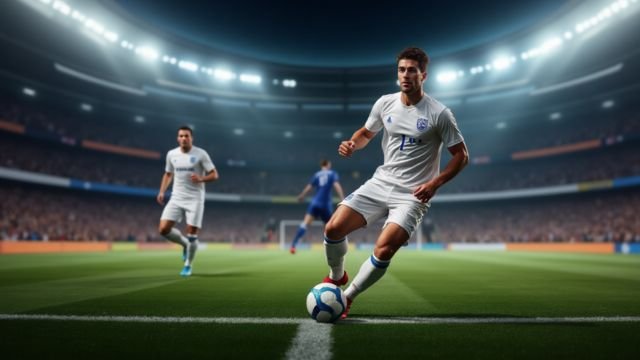
The Evolving Role of Modern Defenders
Defense has always been a cornerstone of competitive sports, but the role of defenders has evolved dramatically in recent years. No longer are they simply tasked with stopping opponents; modern defenders must read the game, anticipate danger, initiate attacks, and adapt to tactical shifts in real time. Their value extends beyond physical attributes, encompassing intelligence, communication, and strategic awareness. As teams rely more heavily on detailed evaluation and 스포츠분석, the importance of elite defensive performance has become clearer than ever. Understanding what makes top defenders so effective reveals the subtle skills that separate good athletes from truly elite ones.
Mastery of Positioning and Spatial Awareness
One of the defining traits of an elite defender is exceptional positioning. Great defenders do not rely solely on physical speed or size; they prevent dangerous situations by being in the right place at the right time. Positioning involves reading the flow of play, tracking opponents, and maintaining angles that limit scoring opportunities. This skill requires not only awareness but also deep tactical knowledge. Defenders must constantly assess where to stand to cut passing lanes, shrink space, and guide attackers into less threatening areas.
Spatial awareness works hand in hand with positioning. Elite defenders maintain a mental map of the field or court, understanding the relationship between teammates, opponents, and open space. This allows them to anticipate movements before they happen. Through careful study and 스포츠분석, teams now recognize that positioning is often more valuable than sheer physical dominance.
Anticipation and Game Intelligence
The ability to anticipate plays is perhaps the most underrated defensive skill. Top defenders read body language, analyze tendencies, and predict actions seconds before they unfold. This anticipation allows them to intercept passes, block shots, or close down attackers with precise timing. Anticipation is not instinct alone; it is built through film study, pattern recognition, and experience.
Game intelligence also includes understanding team strategy and adapting quickly to new situations. Elite defenders know when to step up, when to drop back, and when to switch assignments. Their decisions influence the entire team’s structure. In many ways, defenders serve as tactical anchors, ensuring cohesion between midfield, backline, and goalkeepers. Coaches often rely on defenders with high game IQ to lead communication and maintain stability under pressure.
Physical Strength and Controlled Aggression
While intelligence and positioning are crucial, physical attributes remain a vital component of elite defense. Strength, agility, balance, and acceleration help defenders win duels, maintain body control, and react effectively to fast-moving plays. However, elite defenders do not use physicality recklessly. Controlled aggression is key—they challenge opponents with precision, knowing when to commit and when to hold ground.
Tackling, blocking, and physical contests must be executed with timing and discipline. Poorly timed aggression results in fouls or costly mistakes. What separates great defenders from average ones is the ability to apply physical pressure without losing composure. This balance is especially important in high-intensity matches where emotions run high and the margin for error is slim.
Communication and Leadership
Defenders often act as vocal leaders on the field or court. From their deeper vantage point, they can see the entire game in front of them, making communication essential for organizing the team. Elite defenders constantly direct teammates, signal danger, manage defensive lines, and ensure proper spacing.
Leadership extends beyond communication. It also includes maintaining calm under pressure and inspiring confidence in teammates. When defenders remain composed, the entire team benefits. Their presence helps stabilize chaotic situations and reinforces collective discipline. Defensive leaders often emerge as the heartbeat of successful teams, guiding younger players and setting standards for effort and focus.
Versatility and Adaptability Across Systems
Modern sports demand defenders who can adapt to a variety of tactical systems. Whether switching between zonal and man-marking schemes, adjusting to high-press strategies, or balancing offensive duties, versatility has become a hallmark of elite defensive play. A defender may need to shift between multiple roles within a single match.
In sports like soccer, defenders often contribute to build-up play, requiring strong ball-handling and passing abilities. In basketball, versatile defenders switch across positions to combat mismatches. The best defenders not only neutralize threats but also enhance team fluidity. Their adaptability allows them to thrive in different formations and styles, a skill increasingly highlighted in advanced 스포츠분석 models.
Mental Toughness and Resilience
Defense is mentally demanding. Mistakes can result in immediate scoring opportunities, meaning defenders must show resilience and short-term memory. Elite defenders recover quickly from errors, maintaining concentration throughout the match. Mental toughness also includes handling pressure, staying disciplined, and maintaining effort in physically draining situations.
Great defenders embrace challenges and often elevate their performance in critical moments. Their mindset reflects determination and focus, contributing to a team’s overall psychological strength.
Why Elite Defenders Are Irreplaceable
Elite defenders are the backbone of championship-caliber teams. Their influence extends beyond stopping opponents; they shape tactics, inspire teammates, and contribute to both defensive stability and offensive transition. With the growing use of detailed performance metrics and 스포츠분석, teams now understand how vital these unseen contributions truly are.
Defensive mastery is a blend of intelligence, athleticism, discipline, and communication. It requires constant adaptation and unwavering focus. As modern sports continue to evolve, the qualities of elite defenders will remain essential, proving that defense is not merely a physical task but a sophisticated art form that defines the success of teams at every level.


